Showing posts with label Ancient Greek Thought. Show all posts

Saturday, January 31, 2009

Cicero rewriting Plato: three exploratory seminars

The Durham Centre for the Study of the Classical Tradition (http://www.dur.ac.uk/classical.tradition/) is in the early stage of developing a research project tentatively entitled ŒCiceroniani sumus: the influence of Cicero on the cultural imaginary of the West¹. A central theme here is Cicero¹s role in mediating and transforming Greek philosophy, not least through his translations and adaptations of Plato. As a first sounding of this territory, the Centre will sponsor three exploratory seminars in Epiphany term 2009 that will look at Cicero¹s engagement with Plato in the de Republica:

Seminar 1: Cicero, de Republica 1.65-67 ~ Plato, Politeia 8. 562c - 563c.

Seminar 2: Cicero, de Republica 3.27 ~ Plato, Politeia 2.360e - 362b.

Seminar 3: Cicero, de Republica 6.26-29 ~ Plato, Phaidros 245cff.

The seminars are open to all. Indeed, an analysis of Cicero¹s reception of Plato should ideally draw on expertise in an unusually wide range of areas within the field: ancient Greek, Greek philosophy, Latin, Roman history, and political theory, among others. The seminars are designed to bring together experts in all of these areas, in what we hope will be a mutually illuminating conversation. We shall work with the original texts, but also translations, and, even though we shall be discussing points arising from the Greek and the Latin, there is no expectation that participants have these languages.

Dates and times:

Seminar 1: Friday, 6 February, 1 - 2.30 pm
Seminar 2: Friday, 27 February, 1 - 2.30 pm
Seminar 3: Friday, 13 March, 1 - 2.30 pm


If you are interested in joining, please contact either Louise Hodgson
(l.l.hodgson@durham.ac.uk) or Ingo Gildenhard (ingo.gildenhard@dur.ac.uk).

We shall distribute readings (original texts, translations, commentaries) to all participants early next week.

Louise Hodgson
Ingo Gildenhard
Monday, September 29, 2008

CONF: Neo-Platonism and Its Legacy

Call for Abstracts
2009 ANNUAL CONFERENCE ON CHRISTIAN PHILOSOPHY
FRANCISCAN UNIVERSITY OF STEUBENVILLE
April 24th and 25th 2009
NEO-PLATONISM AND ITSCLEGACY
Keynote Speakers
John Dillon, Trinity College Dublin
Stephen Gersh, University of Notre Dame
Wayne Hankey, Dalhousie University

The MA Philosophy Program at Franciscan University of Steubenville invites all scholars
working in the area of Neo-Platonism to submit abstracts on any topic relevant to the
theme of the conference. This includes especially the Medieval, or Renaissance periods,
but can be the Modern or Contemporary periods as well. Graduate students are welcome
to submit proposals. Abstracts should not exceed one page and must be received by email
or hard copy by March 24th 2009. Finished papers should not exceed 25 minutes reading
time. Proceedings of the conference will be published in Fides Quaerens Intellectum.
Conference and meal fees, including lunches, dinner and closing banquet are waived for
all those presenting papers. Submissions should be sent to:
Dr. Mark Roberts
Director, MA Philosophy Program
Franciscan University of Steubenville
1235 University Blvd.
Steubenville, OH 43952
Email: mroberts@franciscan.edu

CONF: Teleology in the Ancient World. The Dispensation of Nature

Venue: The University of Exeter, 8-11 July 2009

Organisers: Dr. Julius Rocca and Prof. Christopher Gill

An international conference which will discuss the ways teleological arguments were used in medicine and philosophy in antiquity, and how these arguments have continued to inform and influence current debate on evolution, creationism, and intelligent design. As well as examining philosophical contributions to the subject, ranging from Platonism to Stoicism, a special aim of the conference is to show how ancient medical thinking on this topic relates to ancient philosophical ideas. Examining teleological methodologies in ancient medical thought from Hippocrates to Galen will offer a critical evaluation on the place of teleology within medical science, its cultural contexts, its account of human development, and teleological responses to competing explanatory theories of human structure and function.

Keynote speaker Professor David Sedley, University of Cambridge, “Socrates’ place in the history of teleology.”

Other speakers include: Elizabeth Craik, University of St. Andrews; John Dillon, Trinity College, Dublin; Rebecca Flemming, University of Cambridge; R. J. Hankinson, The University of Texas at Austin; M.R. Johnson, University of California, San Diego; Mariska Leunissen, Washington University in St. Louis, Missouri; Jan Opsomer, University of Cologne; Mark Schiefsky, Harvard University; Samuel Scolnicov, Hebrew University of Jerusalem; R.W. Sharples, University College London; Harold Tarrant, University of Newcastle, Australia; Philip van der Eijk, University of Newcastle upon Tyne.

For further information, including accommodation and conference booking, please contact:

Dr Julius Rocca or Professor Chris Gill,

Department of Classics and Ancient History,

University of Exeter,

Amory Building,

Rennes Drive,

Exeter, EX4 4RJ,

UK

J.S.C.Rocca@exeter.ac.uk

C.J.Gill@exeter.ac.uk

Thursday, May 22, 2008

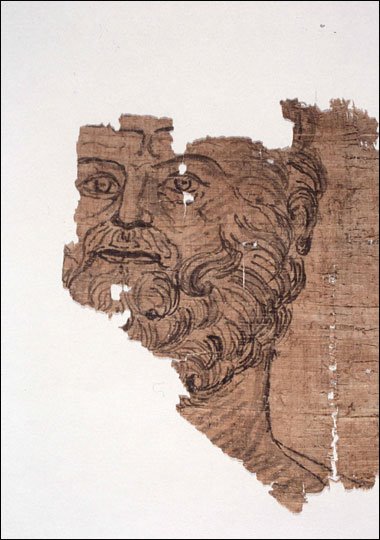
The Artemidorus Papyrus Conference


St. John's College, Oxford University, June 13th, 2008.

The one-day conference at St John's College, Oxford, aims to bring specialists on all aspects of the papyrus together. We are especially glad that colleagues from Germany, Italy, Switzerland, the UK and the USA have agreed to participate: While Prof Dr Luciano Canfora (Bari/Italy) has had to cancel due to other commitments, we shall hear Prof Dr Margarethe Billerbeck (Fribourg/CH), Prof Dr Bärbel Kramer (Trier/Germany), Dr Dirk Obbink (Oxford/UK), Prof Dr Peter Parsons (Oxford/UK), Nicholas Purcell FBA (Oxford UK), Prof Dr Richard Talbert (UNC Chapel Hill/USA) and Prof Dr Nigel Wilson (Oxford/UK).

The aim of the conference is to study the artefact, and its text, map, and images, as "gobbets" first (in a well-established Oxford tradition), thus contributing to a deeper understanding of what the papyrus presents, before discussing probabilities and authenticities.

Official website: www.artemidorus.de